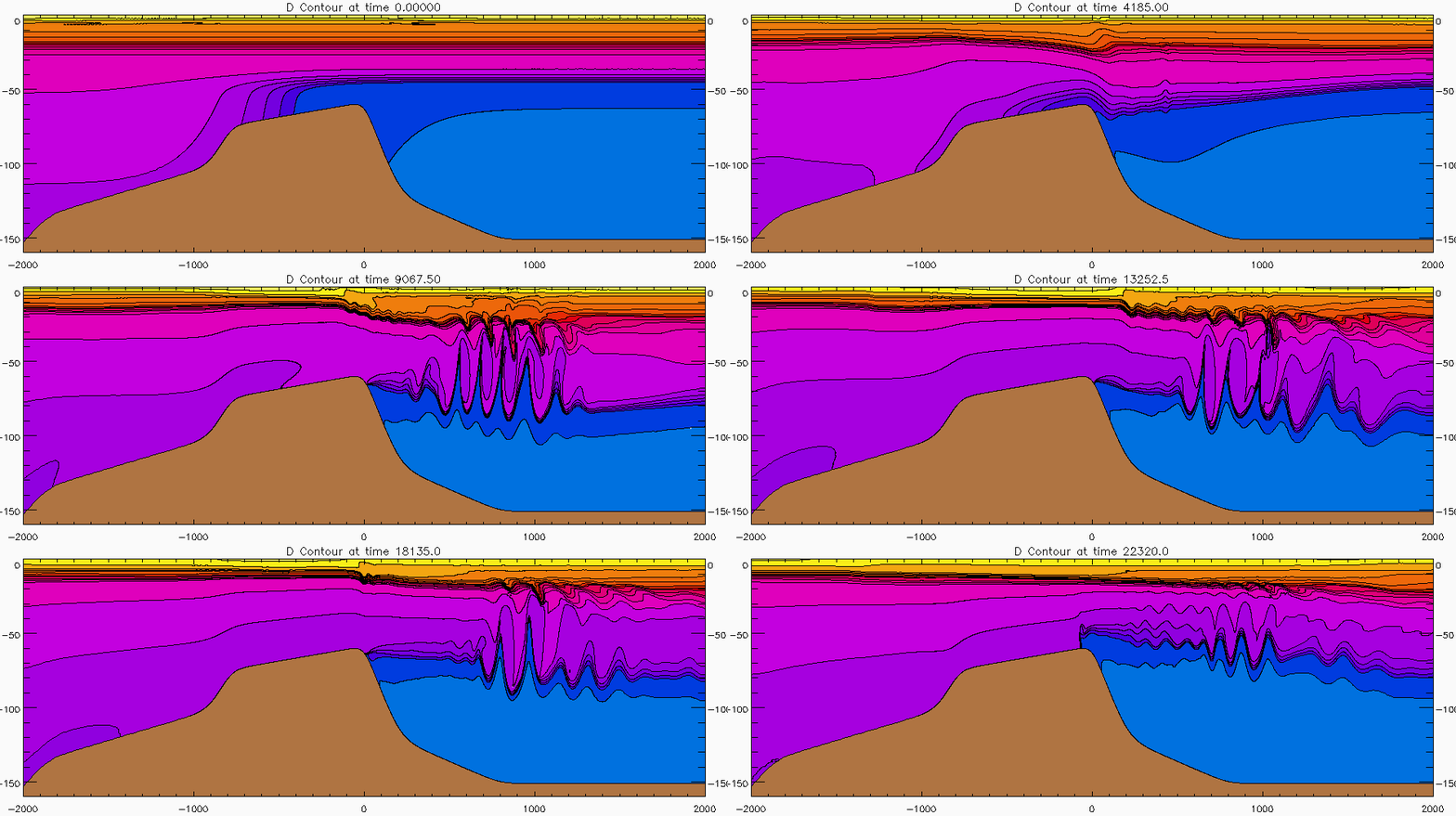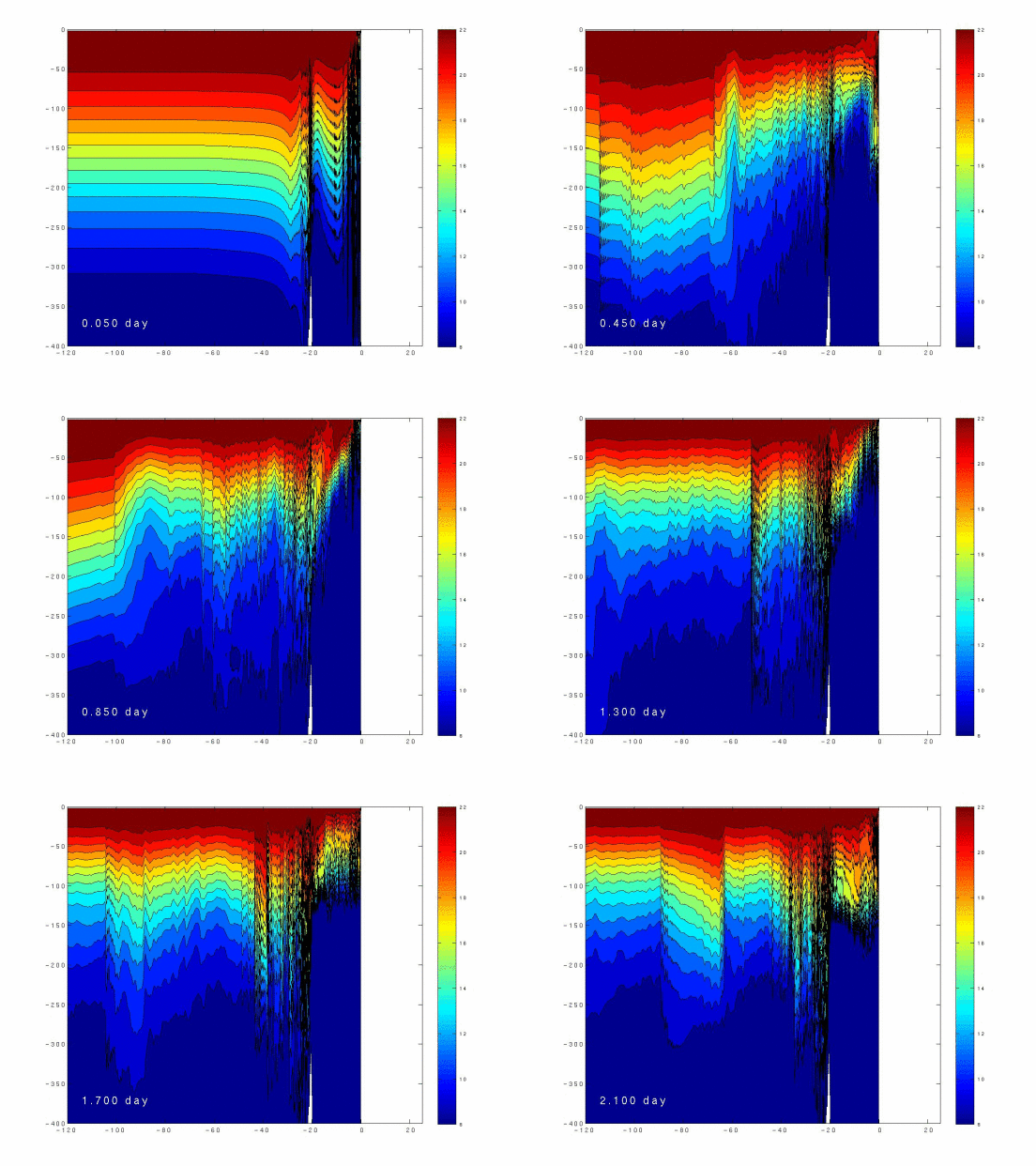
Normal case D (left) and the case without the lower seamount (right)
Normal case D (left) and the case without the lower seamount (right)

Extend our domain 80km further east


Only tidal cycle (no K-branch intrusion). Normal case C (left) and the case extending our domain 80km further east.
Other animation for internal waves!
These animations illustrates the generation of large internal waves downstream of the Knight Inlet sill. The topography and density stratification are taken from observations made by David Farmer and Larry Armi at the Knight Inlet Sill, BC.
1. Case A: Inviscid tidal flow over the Knight Inlet Sill. This case is an inviscid model run. A large overturning wave above the downstream side of the sill creates a thick layer of slow moving fluid. Beneath, a thin downslope jet is formed. This mechanism lies behind the generation of the Chinook winds on the eastern side of the Canadian Rockies. The jet is unstable and strong vortices with associated pulsations in the velocity are created.
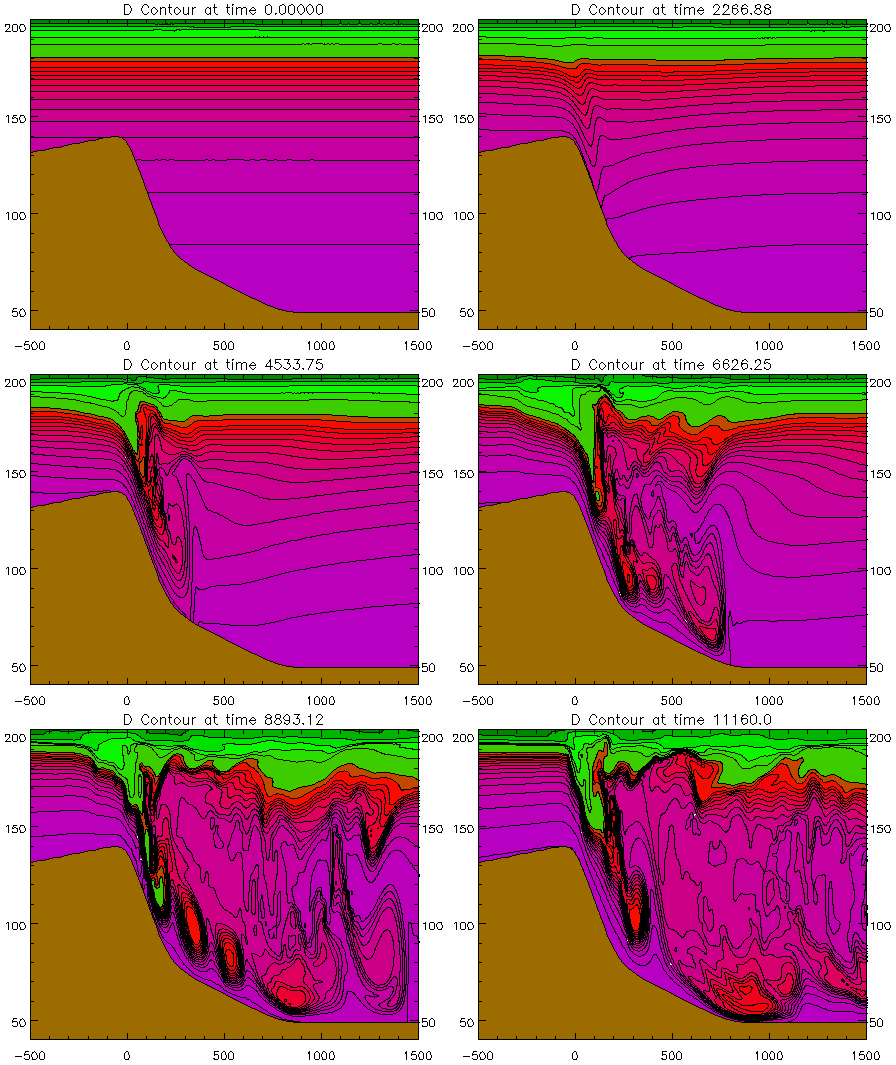
2. Case B: Uses observed density, vertical viscosity/diffusivity at bottom only. The stratification for depths greater that 20 m has been reduced. It uses a Richardson number eddy viscosity/diffusivity parameterization. This is similar to our combined tidal and Kuroshio currents.
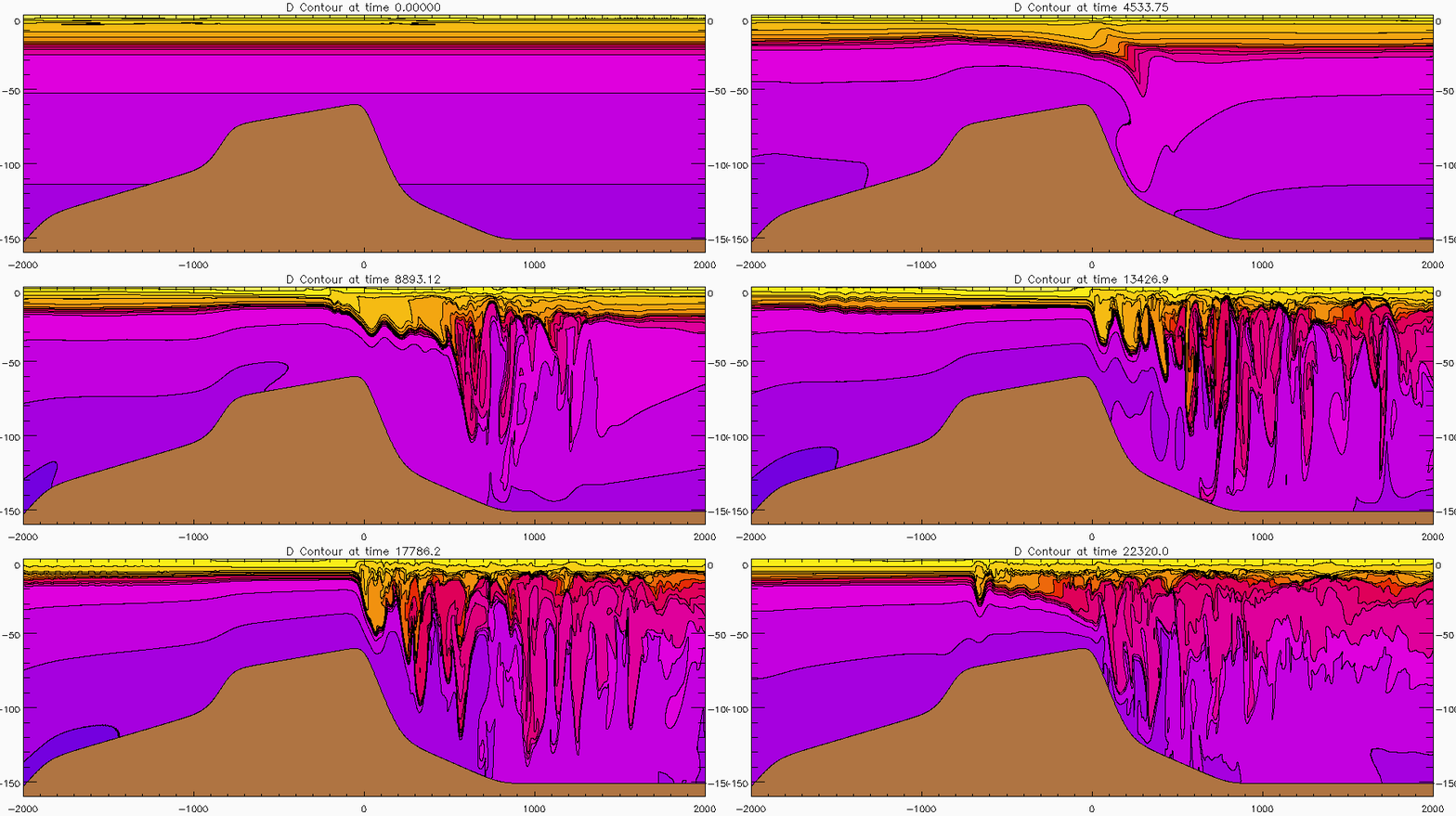
3. Case C: This case used a horizontally varying initial stratification and a Richardson number eddy viscosity/diffusivity parameterization. Similar to our tidal current only simulation without Kuroshio intrusion.